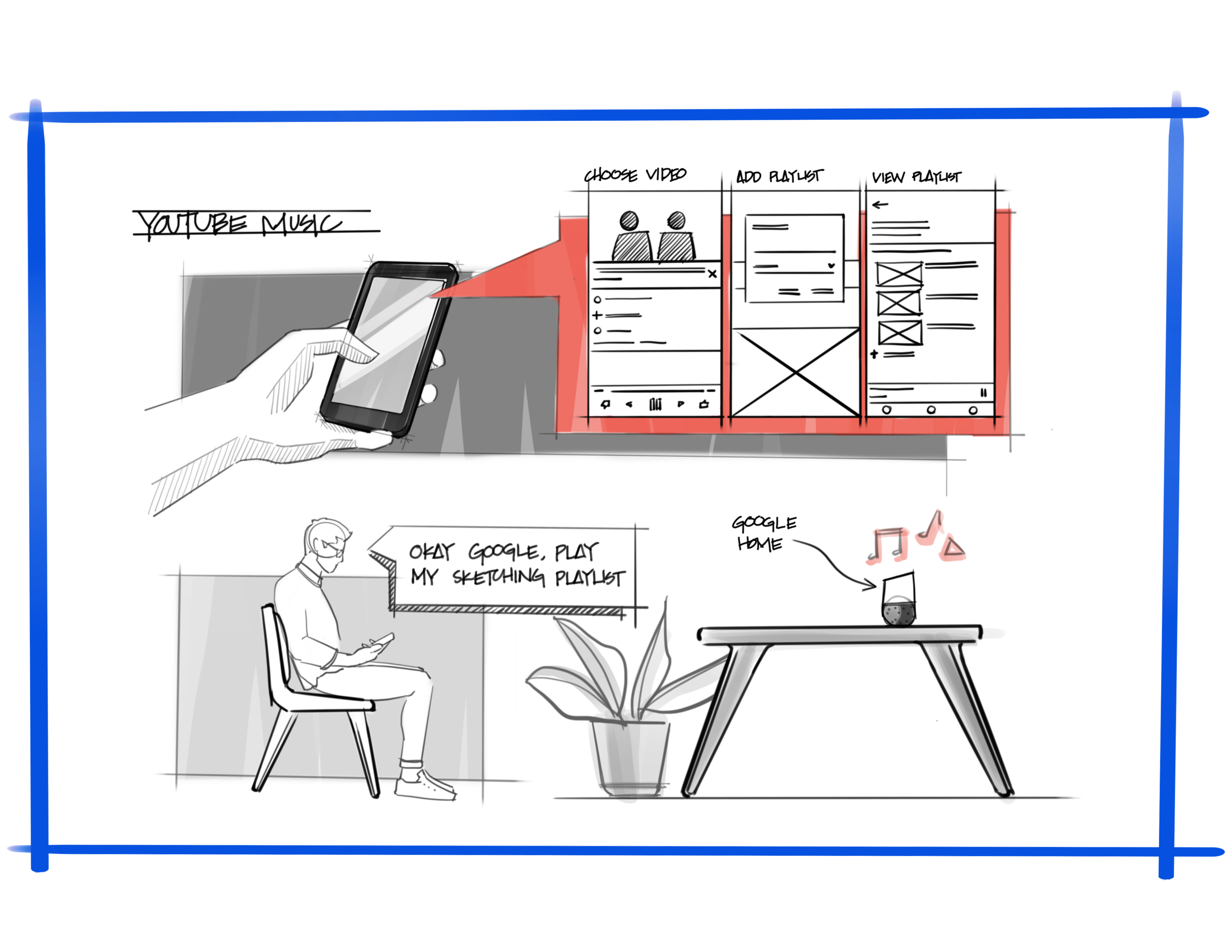
SKETCHING APPLICATIONS IN HCI
A common myth about sketching is that it's only applicable to the arts or design fields like industrial design. Sketching is a universal skill that can be applied to HCI, engineering, etc.
Some valuable forms of sketching in HCI are storyboards, environments, wireframes, and note annotations.
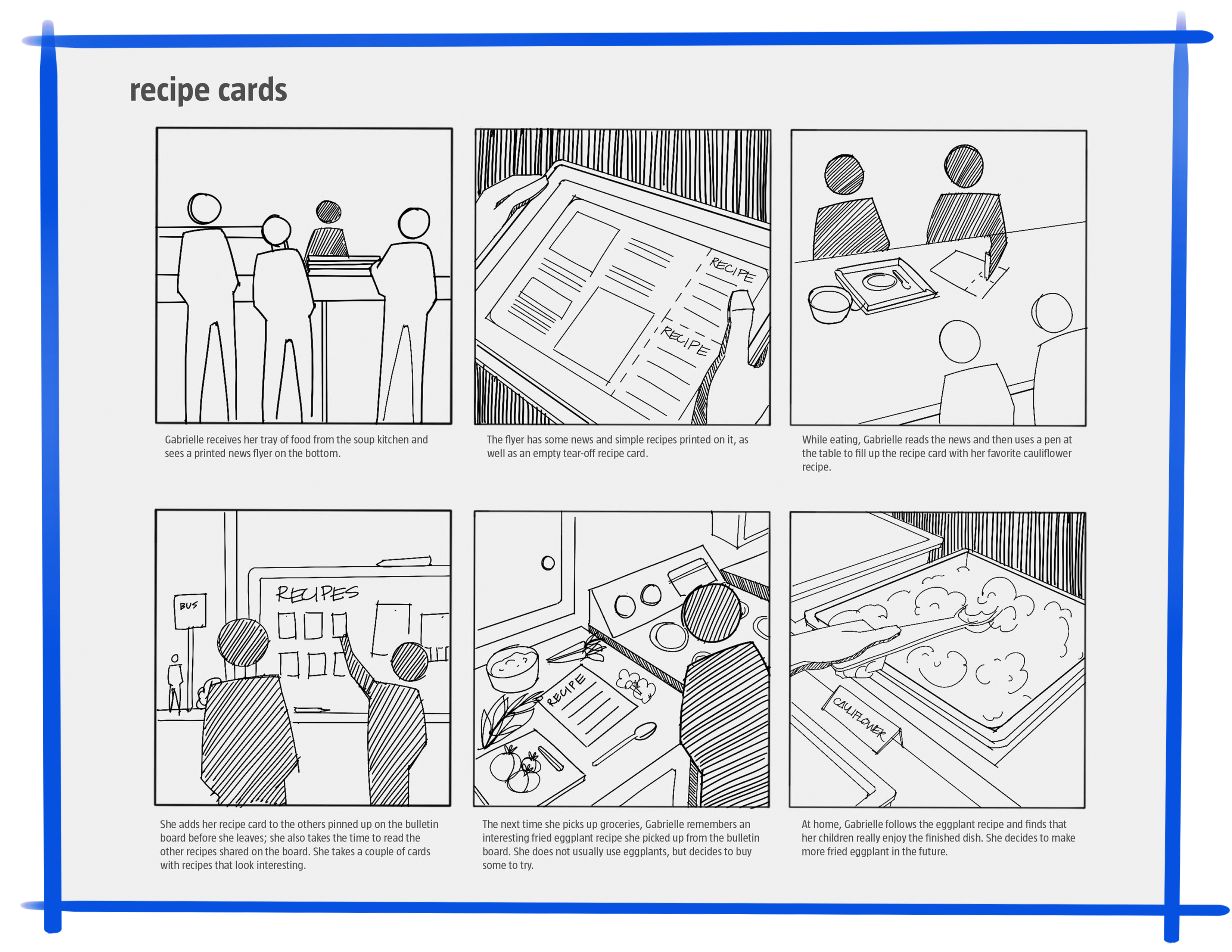
STORYBOARDS
Storyboarding is an effective way to communicate how a product, service, or design works. A typical storyboard includes frames, people, interactions, context, and captions.
ENVIRONMENTS
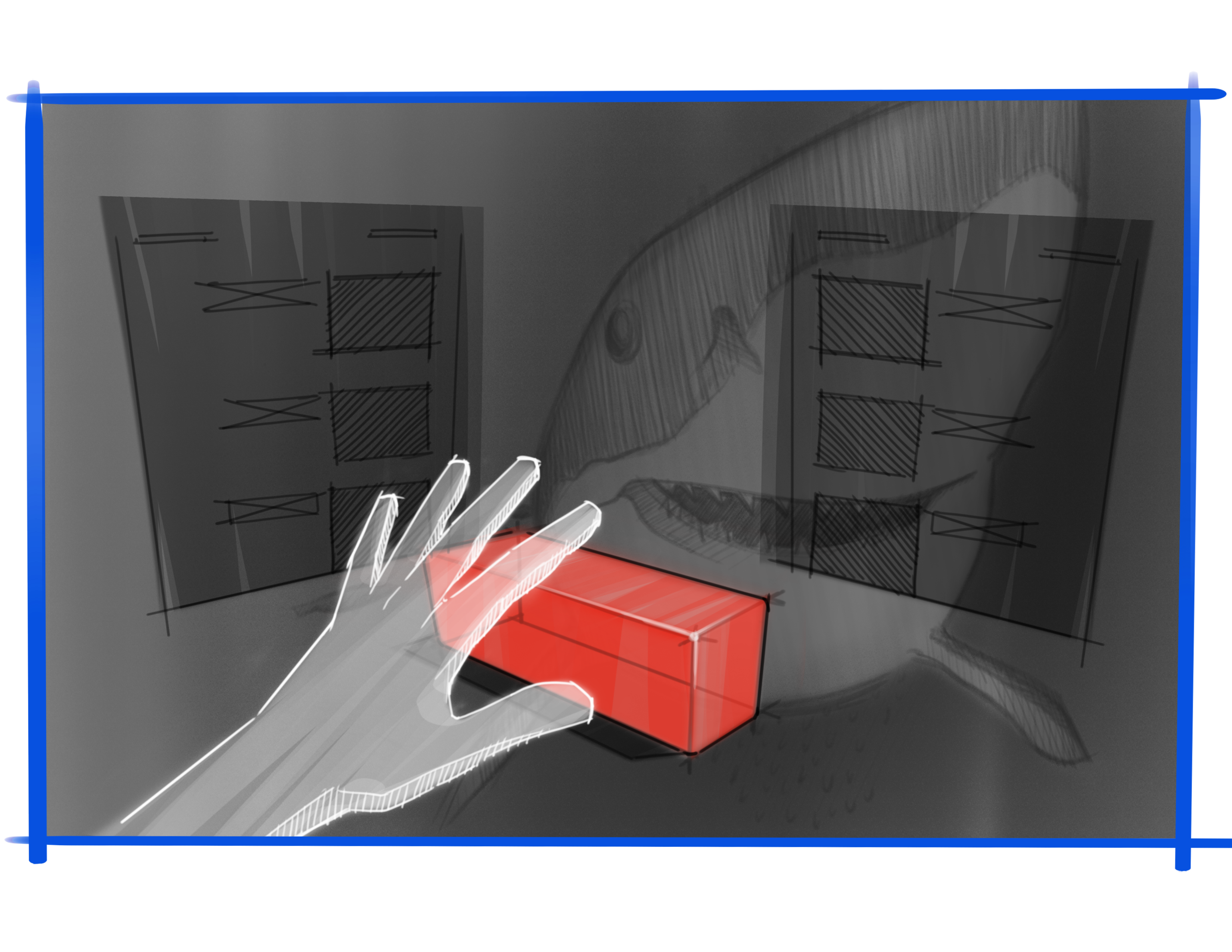
Sketching environments can be useful if you don't want to prototype a concept. For example, this sketch shows a Virtual Reality environment. Instead of using a game engine like Unity, you can sketch out your idea to tell the proper story for engineers to build.
WIREFRAMES
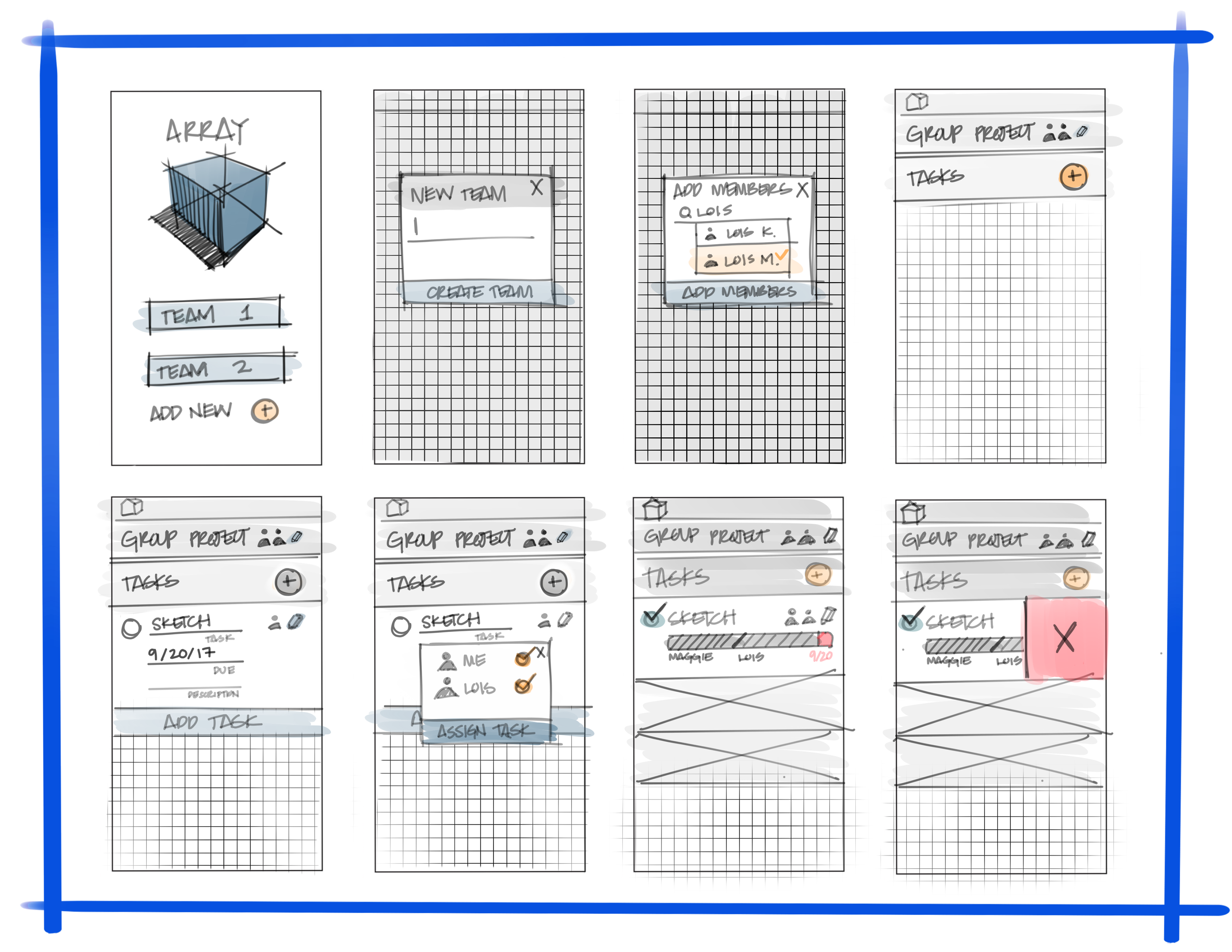
Wireframes are the most common use of sketching in HCI. They quickly allow designers to think through a user experience flow. The better your wireframes are, the more time you can spend in the sketching phase without sacrificing fidelity.
These wireframes were sketched on the iPad Pro with the apple pencil using procreate.
ICONS
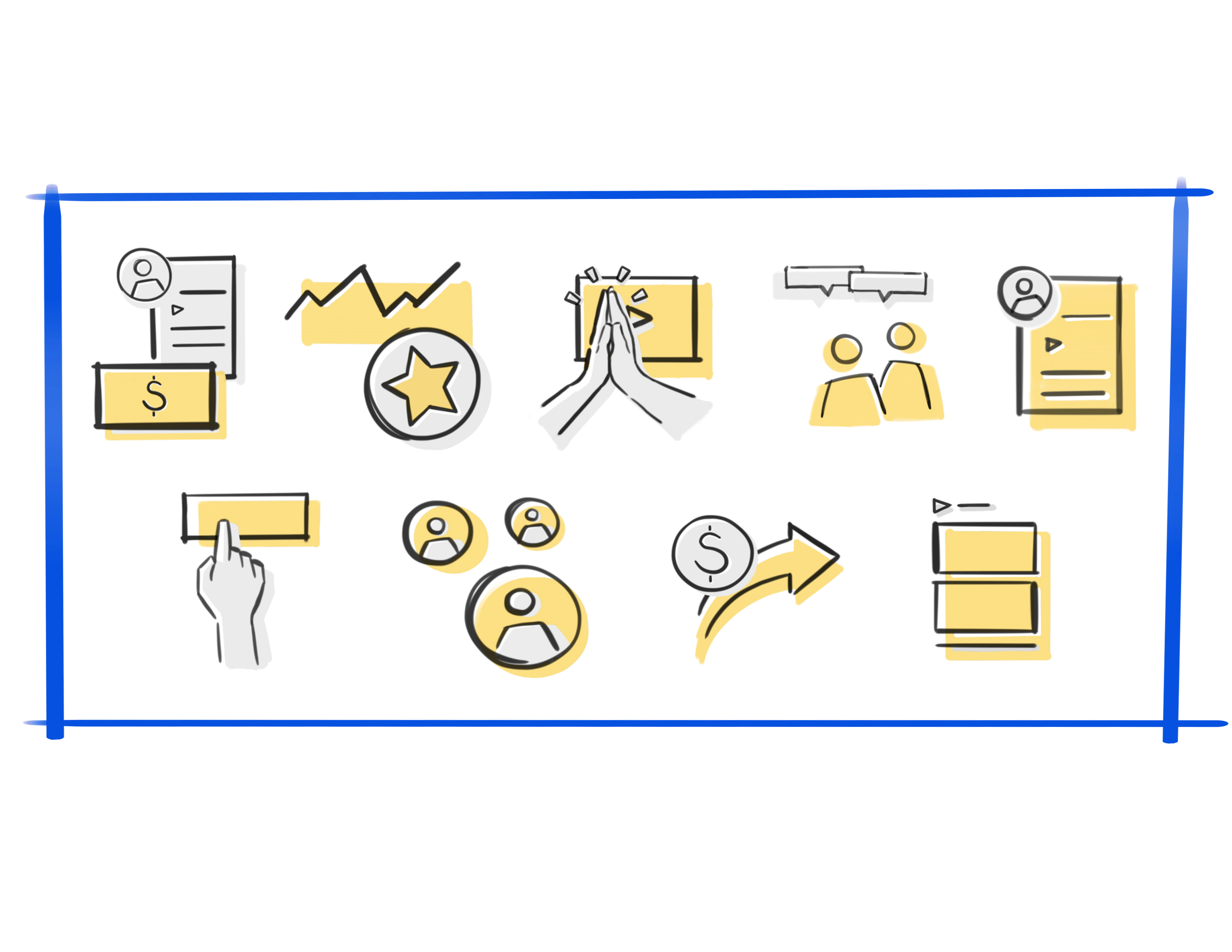
Instead of using someone else's icons from Noun Project, you can sketch your own! They are especially great for presentations and websites. Hand drawn icons give a sketchier feel and can be more engaging and approachable.
NOTE ANNOTATIONS
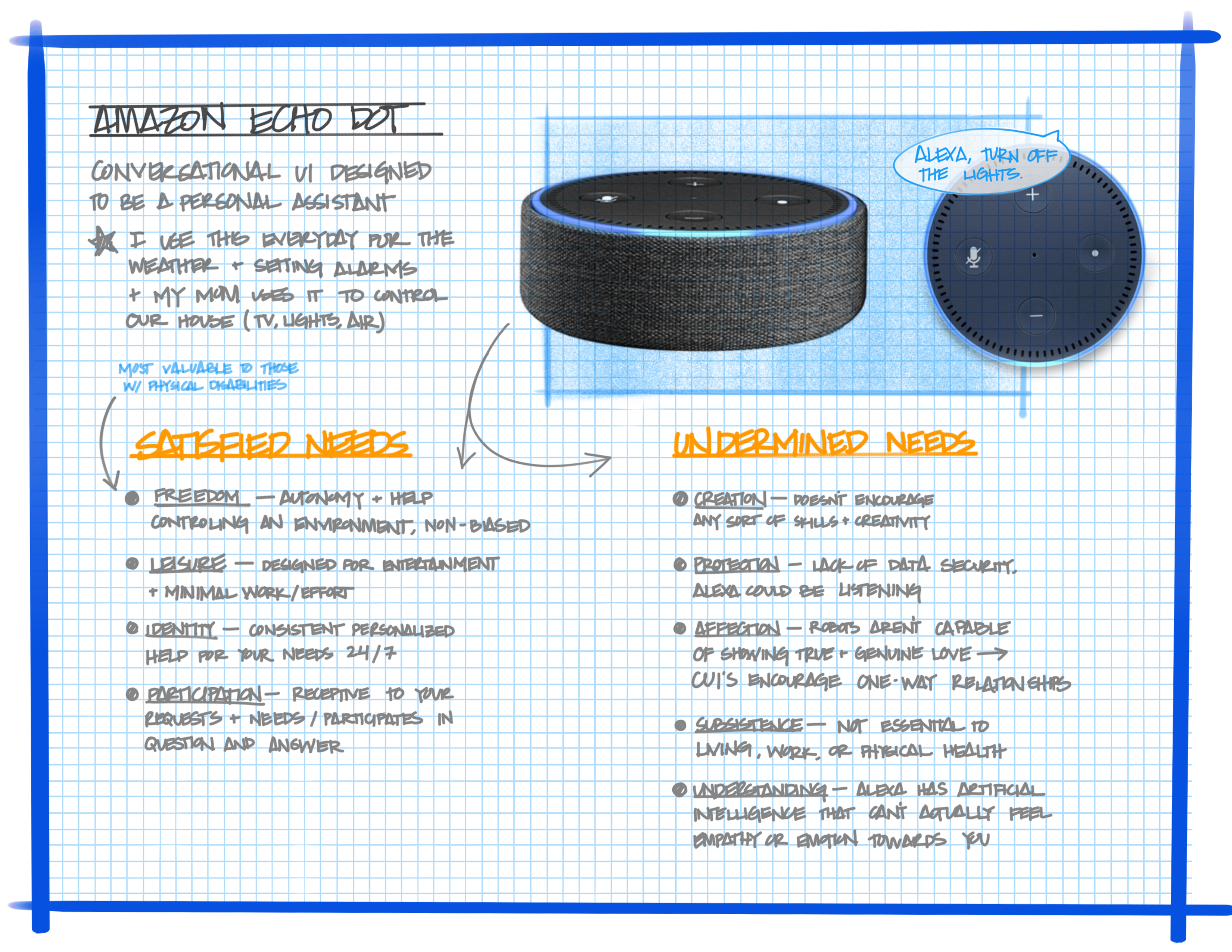
Research is an important part of the design process. To make your note taking clear for others to understand, you can annotate photos with sketching. Digital sketching makes this easy because you can sketch right on top of photos or documents.
SCENARIOS
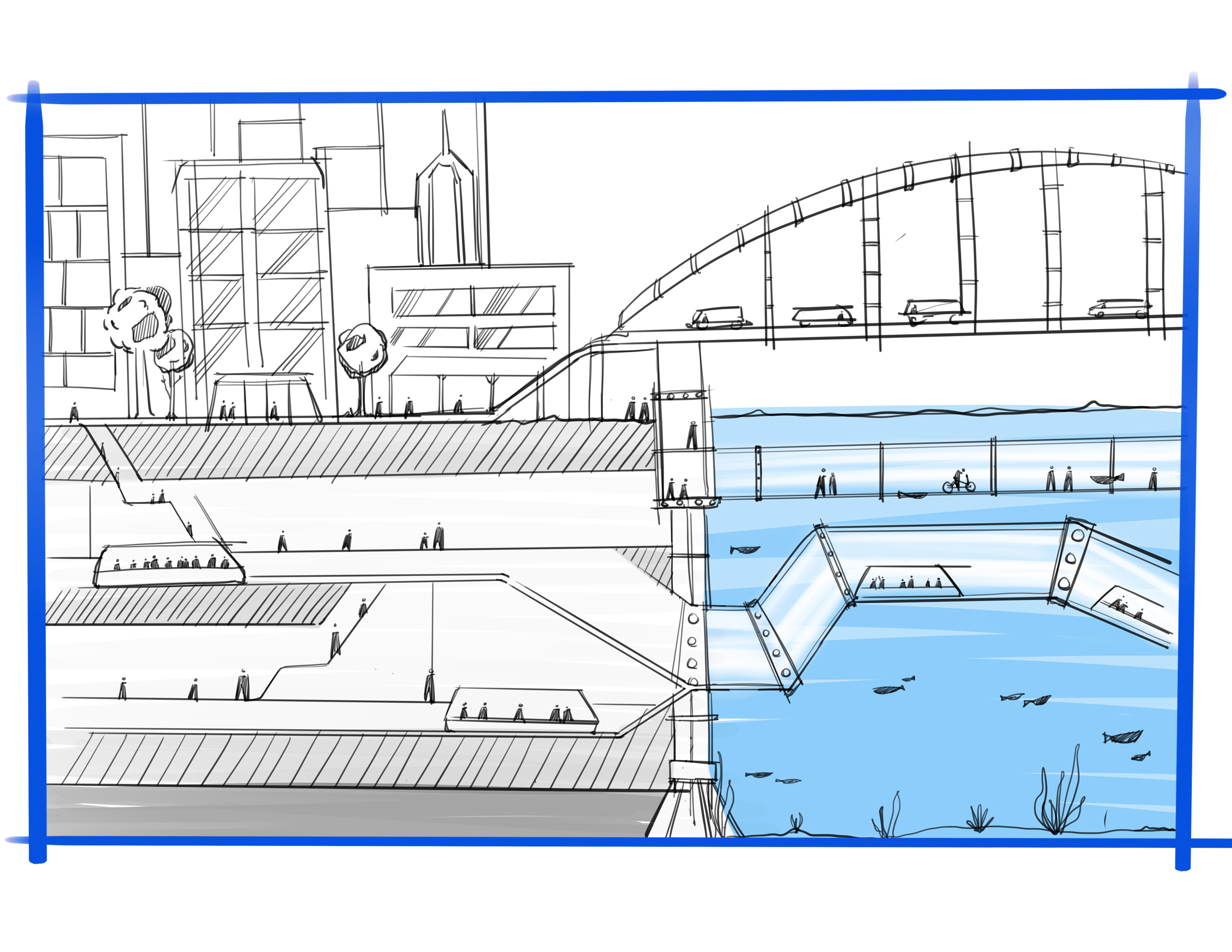
Sketching scenarios are helpful when you need to communicate a large or abstract idea. This is a way to visualize beyond reality and mock-up concepts in a cheap, fast, and effective manner.